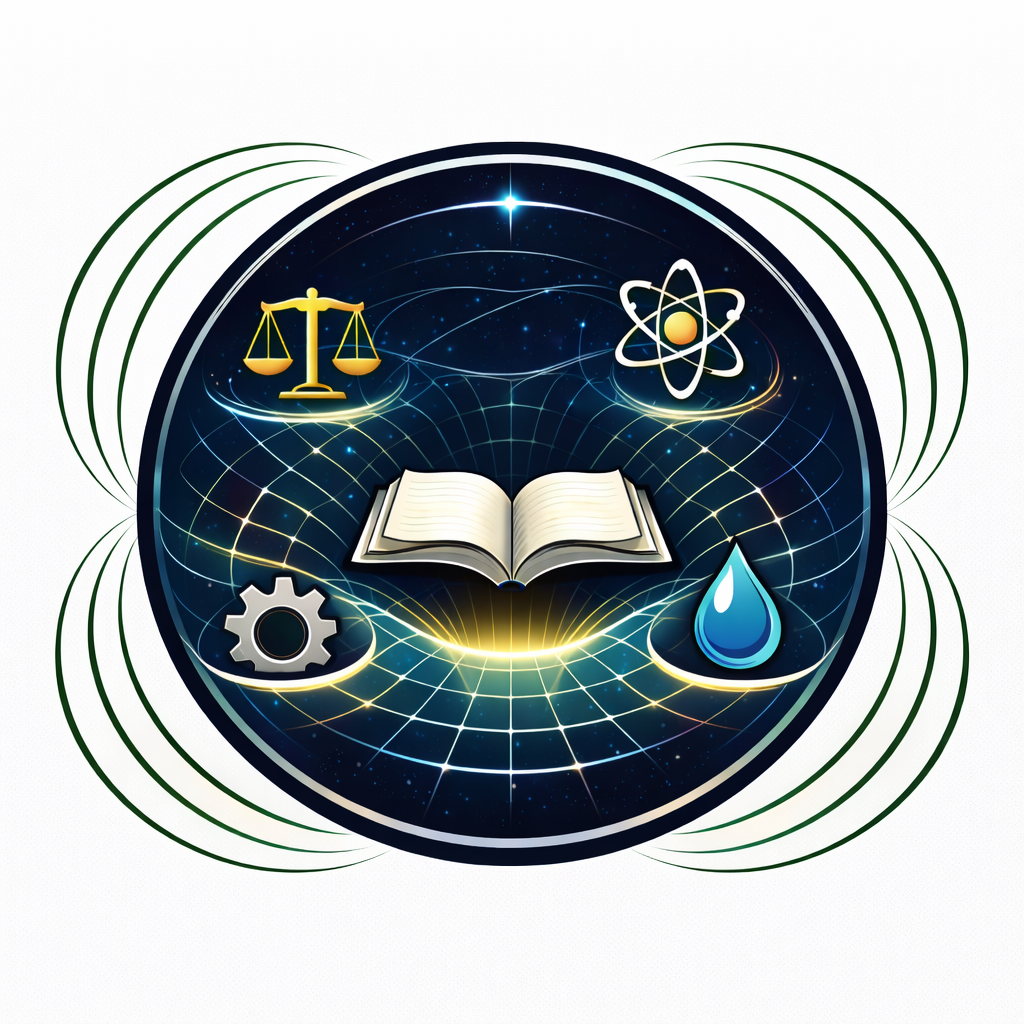
परमाधारः
Sanskrit
IAST
English (literal)
Being is held by threads of law, not by itself; the supreme ground of law is called Param Īśvara.
English (poetic)
Law points to the Necessary Ground.
Commentary
Bhāṣya
This mantra names Param Īśvara as the necessary ground of being (adhāra) and the ground of moral law. It does not derive God from myth or tribe; it derives the need for a non-contingent foundation from the very structure of law: regularity is not selfexplanatory when treated as ultimate. The hymn remains compatible with science because it does not use God to fill gaps in mechanism. Gravity and magnetism are not replaced by deity; they are read as signs of intelligible order. Param Īśvara is not ‘one more force’ in the universe, but the condition that law, intelligibility, and obligation are not mere accidents of appetite. The personal dimension appears through karuṇā (compassion) and conscience: the Ground is not cold. The moral law is not merely social contract; it binds even when no one watches. Thus, devotion in Param Veda is primarily obedience to truth and duty, not performance for status.
Praśna–Uttara
Prayoga
- Each day, do one duty that no one can reward.
- Treat moral law as real: ask ‘what ought I do even if it costs me?’
- Resist ‘god-talk’ used to excuse cruelty; moral law forbids it.